Which Hands Defend the Big Blind vs. a Raise?
Which hands defend the big blind? Build a profitable response versus every open size, position, stack depth, and opponent type without punting chips.
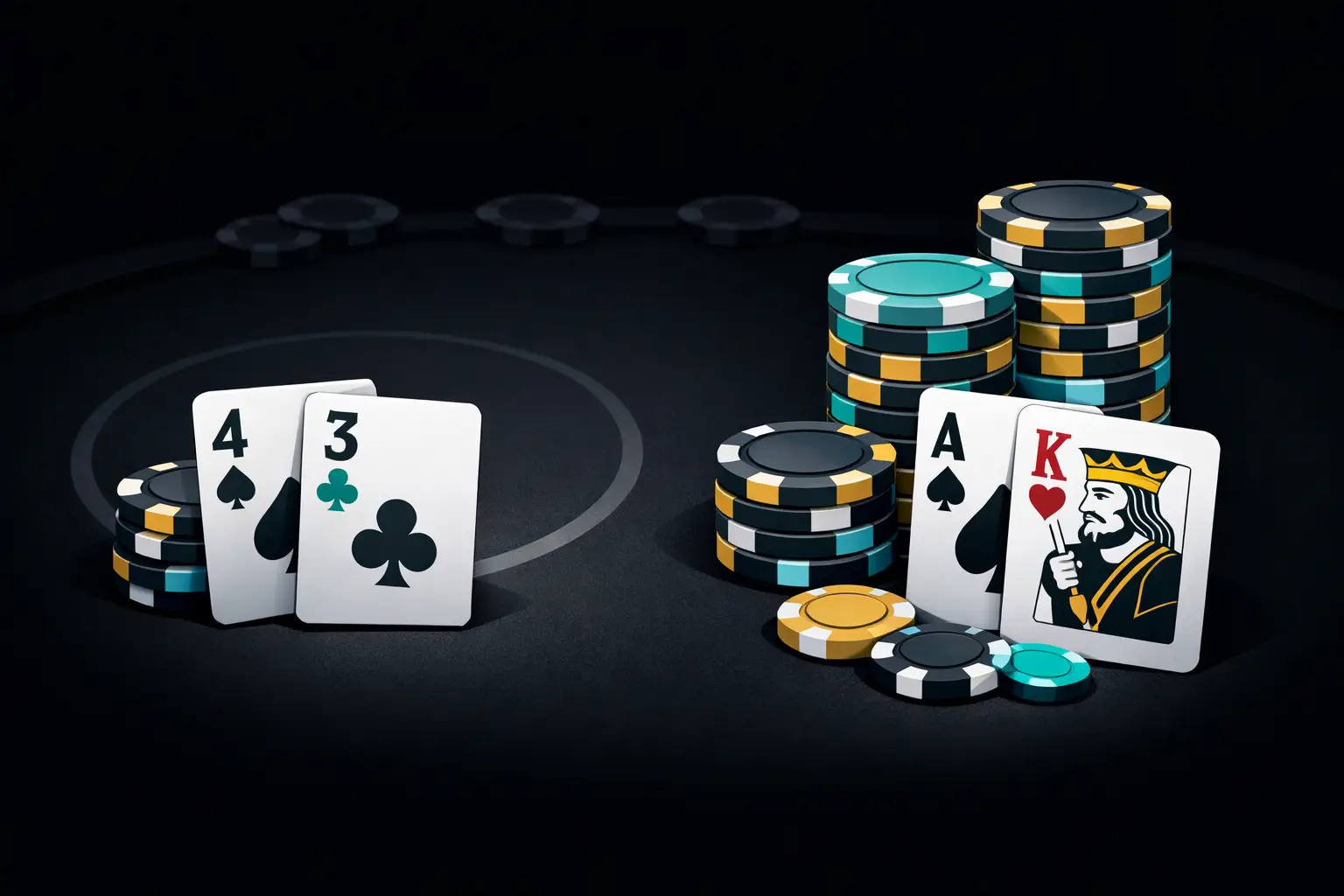
The big blind is where disciplined players quietly print and undisciplined players torch win rate. If you are asking which hands defend big blind, the real answer is not a static chart. It is a decision shaped by the opener’s position, raise size, stack depth, rake, and whether your hand wants to call or attack with a 3-bet.
You already have one blind invested, so folding too much is a leak. But calling every suited hand because you are getting a price is just another leak with better marketing. Your job is to realize enough equity after the flop without putting yourself in miserable spots out of position.
Which Hands Defend the Big Blind Against a Raise?
A big blind defense contains three actions: fold, call, and 3-bet. Strong players do not treat defense as calling wide. They defend the blind by using all three options aggressively and with purpose.
Against a min-raise from the button, you should defend very wide. You close the action, the button is opening a huge range, and the price is excellent. Many suited hands, connected hands, offsuit broadways, and even weak offsuit combinations can continue at some frequency.
Against an early-position raise, tighten up fast. That range is stronger, your positional disadvantage is real, and many pretty-looking hands are dominated. K8 offsuit may look playable after you have posted a blind, but against a solid under-the-gun range it creates too many second-best top pairs. Folding is not weak. It is profitable.
The key principle is simple: defend wider against late-position opens and smaller sizing. Defend tighter against early opens and larger sizing.
Your Position Relative to the Opener Changes Everything
A button open is the widest common opening range. That means hands like K5 suited, Q7 suited, J7 suited, T6 suited, 97 suited, 65 suited, and plenty of offsuit hands can become calls. You will still play postflop out of position, but you begin with enough equity and a favorable price to fight back.
A cutoff open deserves more respect. You can still call many suited kings, suited queens, suited connectors, pocket pairs, and selected offsuit broadways, but the bottom of your defense disappears. Offsuit trash that may survive against the button should usually hit the muck.
Against a hijack or early-position raise, focus on hands that retain equity well: pocket pairs, suited aces, suited broadways, stronger suited connectors, and hands with high-card value. Marginal offsuit holdings become expensive mistakes because they make dominated pairs and struggle to realize their equity.
Start With Hand Classes, Not a Giant Chart
Memorizing every exact combo is useful later. First, understand why certain hand classes perform well from the big blind.
Pocket pairs are natural calls at most stack depths. Even 22 through 66 can defend frequently against late opens because they have clear equity and can win big pots when they improve. Their value drops when stacks get short, because there is less money behind to win after you flop a set.
Suited aces are premium defenders. A2 suited through A5 suited often make excellent 3-bet bluffs because they block strong aces, can make nut flushes, and have wheel potential. Other suited aces commonly call, especially against late-position opens. Their flush potential matters enormously when you are out of position.
Suited broadways such as KQ suited, KJ suited, QJ suited, and JT suited can call or 3-bet depending on the matchup. Stronger versions lean toward 3-betting for value against wide opens. The weaker edge of this group often calls because it keeps worse hands in and avoids inflating a pot with a hand that can be dominated.
Suited connectors and one-gappers are among the best calling hands. 76 suited, 87 suited, 98 suited, T9 suited, and even hands like 86 suited play far better than their raw preflop equity suggests. They can make straights, flushes, pair-plus-draws, and strong semi-bluffs. They are not automatic calls against every position, though. A hand like 65 suited loves a button min-raise and hates a large under-the-gun open.
Offsuit broadways need more caution. KQ offsuit and KJ offsuit often continue against late opens, while QJ offsuit and JT offsuit are more sensitive to sizing and opponent tendencies. Weak offsuit aces and kings frequently look stronger than they are. They hit one pair, then pay off better kickers.
Raise Size Is a Range Lever
Do not defend the same range against a 2x open and a 3.5x open. That is how players donate blinds while telling themselves they were priced in.
Against a 2x raise, you are calling one additional big blind to compete for a pot of 3.5 big blinds. Your price is attractive, so your range can expand. Low suited hands, weaker connectors, and selected offsuit hands gain enough value to continue.
When the raise grows to 2.5x or 3x, remove the weakest hands first. Weak offsuit kings, queens, jacks, and low suited garbage lose their appeal. At 3.5x or larger, especially at rake-heavy low stakes, your calling range should become much tighter. The open size is telling you that you need more equity and better postflop playability to continue.
Rake is the silent killer here. In many low-stakes cash games, rake punishes marginal calls harder than clean GTO charts from rake-free environments suggest. If you are unsure whether a thin defend survives in your game, folding it is often better than forcing a tiny theoretical edge you cannot realize.
Calling Versus 3-Betting From the Big Blind
A good big blind strategy is not passive. Your 3-bet range should contain clear value hands and carefully chosen bluffs.
Against a late-position open, hands like AA, KK, QQ, AK, and often JJ or AQ want to build the pot. You are out of position, so denying equity and putting pressure on a wide opening range has major value. Do not get cute by flat-calling every monster just because you want to trap.
Your best bluff 3-bets tend to be hands that are too strong to fold but not always thrilled to call. A5 suited and A4 suited are classic examples. They block the opponent’s strongest continuing hands, have solid equity when called, and can apply pressure on many boards. Some suited kings and suited connectors can also enter the bluff mix, particularly versus frequent steal attempts.
Avoid turning every decent suited hand into a 3-bet. Calling hands need to exist. If you 3-bet all your KJ suited, QJ suited, and T9 suited combinations, your flatting range becomes weak and easy to attack. Keep playable hands in both branches.
Stack Depth and Opponent Type Matter
At 100 big blinds, suited connectors and small pairs have room to realize their implied-odds value. At 25 big blinds, those same hands lose some shine because postflop maneuvering disappears. Shorter stacks generally favor higher-card hands and more direct all-in or 3-bet decisions.
Against a player who opens too wide on the button and folds too often to 3-bets, push harder with a polarized 3-bet strategy. Against a player who calls every 3-bet, shift toward value and stop lighting chips on fire with low-equity bluffs.
If the opener is a recreational player who makes huge sizing tells, exploit them. A player opening 5x from early position is usually not inviting you to defend 54 suited because a chart says suited connectors are pretty. Respect the information in front of you.
Multiway pots are different as well. If there is an open and one or more callers, you receive a better immediate price but face more players and lower realization. Suited hands and pocket pairs improve; dominated offsuit hands get worse. K9 offsuit is not suddenly a dream hand because there is dead money in the pot.
A Fast Big Blind Defense Process
Before clicking call, run a quick mental check. Where did the open come from? How big is it? Is the player tight, wide, or clearly recreational? Does your hand make strong pairs, nut draws, or disguised monsters? And is this a call, a 3-bet, or just a hand you are emotionally attached to?
That last question saves money. Most big blind leaks come from defending hands that look connected to the board but are disconnected from the opponent’s range. You do not need to win every blind battle. You need to stop surrendering profitable ones while refusing the traps that crush your red line.
Use an instant solver check when a spot feels close. PokerMoose can show whether your borderline suited king is a defend, a 3-bet, or a fold before guesswork becomes habit. Build the pattern recognition now, then make the next blind defense with pressure instead of panic.
Put it into practice — free.
Open the solver, enter the spot you just read about, and see the optimal play instantly.