When Should You Fold Top Pair? Key Spots
When should you fold top pair? Learn the boards, bets, ranges, and stack depths that turn a strong one-pair hand into a disciplined laydown in tough pots.
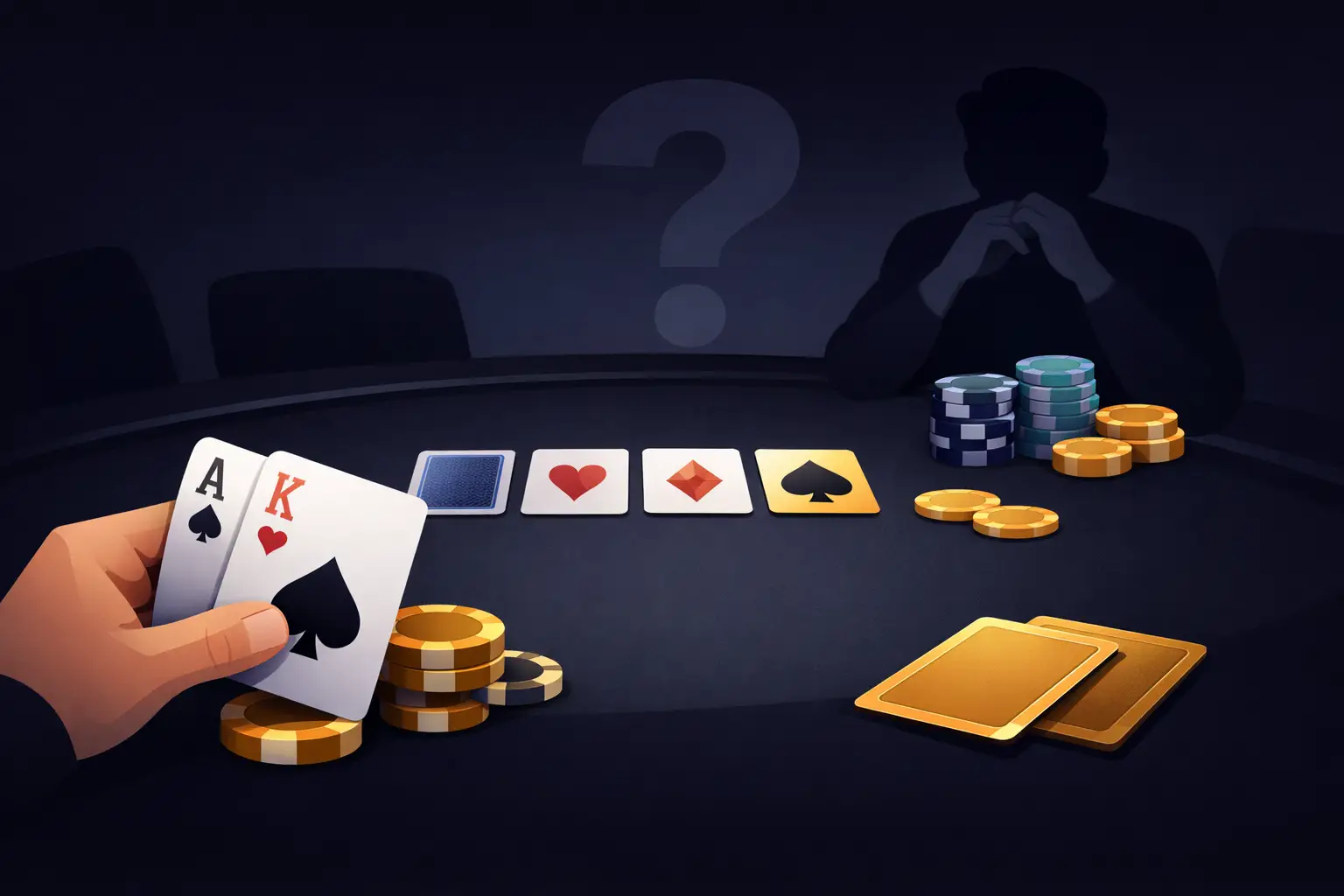
You flop top pair with a respectable kicker, feel good, and start building a pot. Then the turn brings heat, the river gets ugly, and an opponent who has barely put in a chip all session suddenly wants your stack. When should you fold top pair? The answer is not "whenever they show aggression." It is when the action, board, range, and player type make one pair a bluff-catcher at best and a dead hand at worst.
Top pair wins plenty of pots. It also burns stacks when players treat it like an automatic stack-off hand. Stop paying off the story your opponent is telling. Start attacking the range behind it.
Top Pair Is a Hand Strength, Not a Verdict
Top pair is only one pair. That sounds obvious, but players routinely forget it once they connect with the board. A hand like A-K on a K-8-4 flop can be extremely strong in a single-raised pot. The same hand can be fragile on K-J-T with two players behind, or after facing a check-raise from a tight player.
The question is never simply, "Do I have top pair?" Ask: what worse hands can realistically take this line, and how many better hands are available?
If the answer is mostly worse hands and draws, keep extracting value. If the answer is sets, two pair, straights, and a tiny number of natural bluffs, folding is not weak. It is how winning players protect their win rate.
When Should You Fold Top Pair Against Big Aggression?
The clearest fold zone arrives when large bets meet ranges that are heavily weighted toward value. This happens most often on connected boards, paired boards, and runouts that complete obvious draws.
Imagine you raise preflop with A-K, get called by a tight player, and see K-9-6 with two hearts. You c-bet, they call. The turn is the 7 of hearts. You bet again and they raise big. Your top pair may look pretty, but their value range contains flushes, sets, two pair, and some straights. What is their bluff range? If they are not turning hands like K-Q or A-9 into bluffs often enough, calling is lighting money on fire.
Big river bets deserve even more respect. Most low- and mid-stakes players do not find enough triple-barrel bluffs or overbet bluffs to balance their value. If a passive opponent calls twice and suddenly jams a river that completes the front-door flush or four-liner straight, top pair is usually a fold.
This is not an excuse to overfold every time the board gets scary. Aggressive regulars know scary cards hit your range too, and they can pressure capped lines hard. But against an unknown or recreational opponent, population tendencies matter. People bluff less than they think, especially for stacks.
Bet Size Changes Everything
A small river bet and a pot-sized river bet are not the same decision. Against a one-third-pot bet, you need to defend more often because the price is attractive. Top pair can call when it blocks value, beats missed draws, or sits near the top of your range.
Against a pot-sized bet, you need to win one-third of the time. Against an overbet, the required defense frequency drops further, but the opponent's range is often more polarized. That means you should not call merely because you have top pair. You need credible bluffs in their range.
Sizing is information, not a magic answer. A player can bet small with the nuts or shove a missed draw. But when a player type consistently uses huge sizes only with strength, believe the evidence until they prove otherwise.
Boards Where Top Pair Loses Its Muscle
Dry boards are where top pair prints value. Wet, connected boards are where it needs a helmet.
On A-7-2 rainbow, A-Q is miles ahead of most calling ranges. Worse aces, pocket pairs, sevens, and random floats can all continue. You should bet for value, often across multiple streets.
On A-J-T with two spades, A-Q has top pair but faces a battlefield. Your opponent can have two pair, sets, K-Q for a made straight, spade draws, pair-plus-draw hands, and hands that improve against you on many turns. You may still bet, but you cannot blindly barrel three streets and shrug off a raise.
Paired boards also change the math. On K-8-8, top pair is frequently strong because there are fewer natural two-pair combinations. But if a tight opponent applies major pressure, trips and full houses become highly relevant. On K-8-8-3-3, a player who calls flop and turn then raises river is representing a narrow, powerful range. Your K-Q is no longer a value hand. It is a candidate for the muck.
The practical rule: the more draws, two-pair combinations, and nutted hands the board creates, the less married you should be to top pair.
Multiway Pots Demand More Folds
Top pair shrinks fast when multiple opponents see the flop. Your continuation bet gets called by one player? Fine. It gets called by two players on a coordinated board? Your one pair is now competing against far more value combinations and more hands with substantial equity.
Say you raise with A-J and get two callers. The flop comes J-T-6 with two clubs. Betting can still be correct, but calling a raise or blasting three streets is dangerous. One player can hold a draw while the other already has J-T, a set, or a strong combo draw. Multiway ranges are not wide, loose heads-up ranges. They are stronger by default.
This is a major leak for players moving up from casual games. They see top pair and think, "I have to protect." Protecting a hand does not mean donating to ranges that already crush it. Check more. Control the pot. Fold to strength when the lineup and texture demand it.
Position and Stack Depth Matter
Out of position, top pair is harder to realize. You have less control over the final pot size, face more pressure, and must act without knowing whether your opponent will keep firing. A marginal top-pair hand that can check-call once in position may become a check-fold by the river out of position.
Stack depth matters too. At 25 big blinds, top pair with a strong kicker can be a completely standard stack-off, especially in a 3-bet pot. There is simply less room for an opponent to represent only premium value.
At 150 big blinds, the opposite is true. Deep stacks make sets, two pair, and disguised nutted hands far more valuable. A turn check-raise or river shove carries more weight because the player had room to build a line around a monster. Do not use shallow-stack instincts in deep cash-game pots.
Use Blockers, but Do Not Worship Them
Blockers can move close decisions. Holding the ace of the flush suit reduces the number of nut flushes your opponent can have. Holding a card that blocks a straight may make a river call more appealing. Conversely, holding cards that block missed draws can make your bluff-catcher worse because your opponent has fewer bluffs available.
But blockers do not rescue a bad call against a player with an underbluffed line. If a passive opponent raises the river on a four-flush board, having the ace of that suit in your hand might matter. It does not magically create enough bluffs for a profitable call.
Use blockers after you have built the opponent's range, not before. Range first. Card removal second.
The Fast Decision Filter for Top Pair
Before you put another big bet into the pot, run this filter:
- Is the board becoming more favorable for their calling range than yours?
- Does this player type bluff at this size and on this street?
- Can you name enough worse hands that take this exact line?
- Are you heads-up, in position, and shallow enough for top pair to retain real value?
If you cannot name the bluffs, you are probably not bluff-catching. You are hoping.
Train the Fold Before It Costs You a Stack
The hardest top-pair folds are rarely obvious during the hand. They are created by one missed detail: a turn card that shifts the range, an oversized sizing tell, a multiway caller, or a deep-stack spot where your kicker no longer matters.
Build the habit of reviewing these hands away from the table. Enter the preflop action, flop texture, sizing, positions, and stack depth into a solver tool such as PokerMoose. Then compare your instinct with a theoretically sound recommendation. You will quickly see which folds are disciplined and which are fear-based overfolds.
Top pair is a weapon when you value-bet it hard against worse hands. It is a leak when you refuse to release it after the evidence turns ugly. Make opponents show you their bluffs, but do not pay them to tell you they have it.
Put it into practice — free.
Open the solver, enter the spot you just read about, and see the optimal play instantly.