How to Avoid Poker Mistakes That Cost You Chips
Learn how to avoid poker mistakes that drain your stack, from tilt and bad calls to missed value. Build a fast, repeatable decision process at every table.
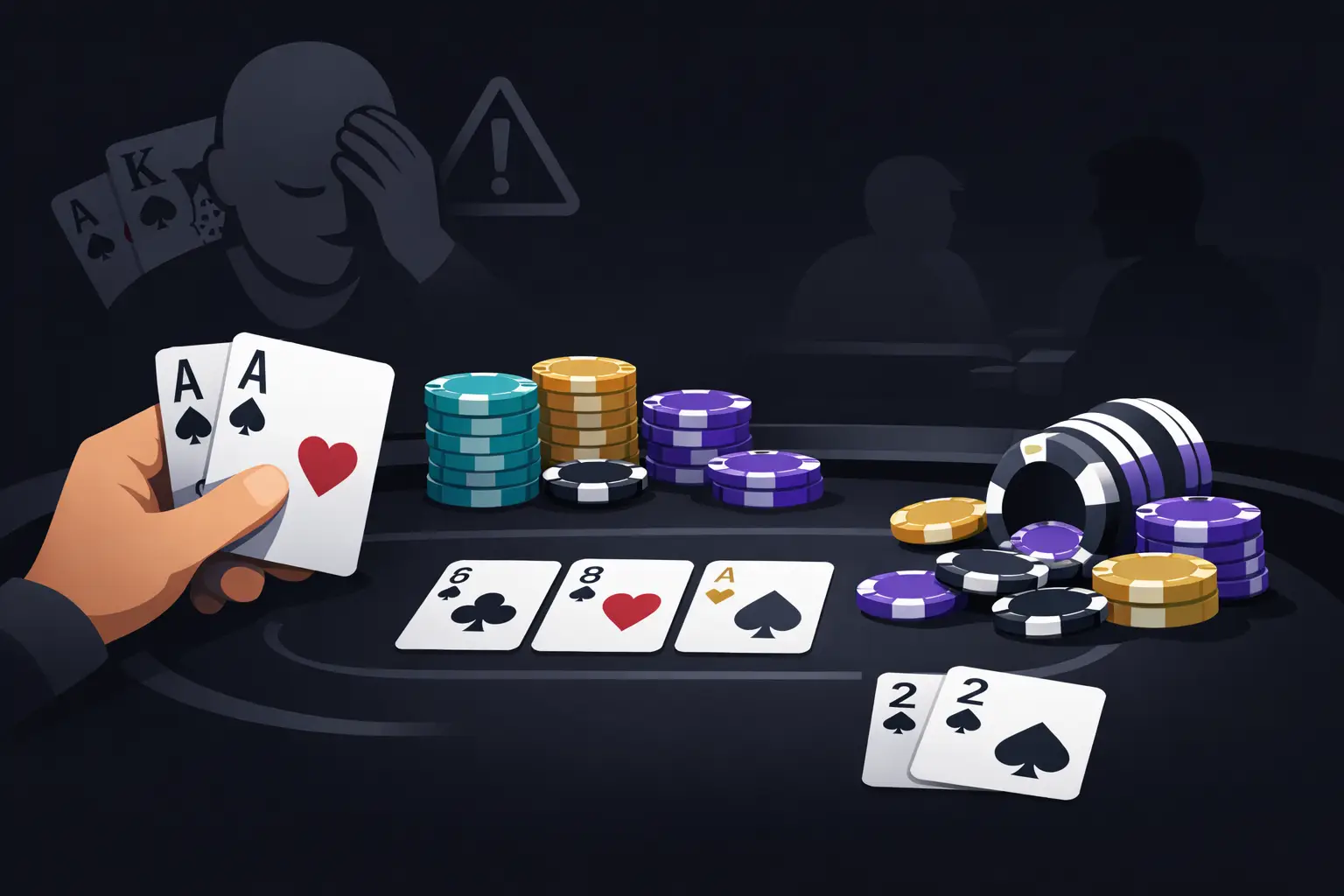
A single loose call on the river can erase an hour of disciplined play. A tilted three-bet can turn a manageable session into a disaster. If you want to know how to avoid poker mistakes, stop treating errors as random bad luck. Most leaks come from repeatable decision failures - and repeatable failures can be fixed.
The goal is not to play scared or wait only for premium hands. The goal is to make decisions with a reason, protect your stack, and force opponents to make the expensive mistakes instead.
Stop Playing on Autopilot
Autopilot is where small poker mistakes multiply. You open the same hands from every position, continuation bet every flop, call because you have "something," and barely notice how the table has changed. That is not strategy. That is clicking buttons.
Before you act, ask three questions: What range does my opponent arrive here with? What hands in that range beat me? What worse hands or draws can realistically continue if I bet?
You will not get a perfect answer every time. You do not need one. Even a quick range-based thought process is far stronger than reacting to the strength of your own two cards alone.
Position should shape nearly every one of those decisions. Hands that are profitable on the button can become folds under the gun. A marginal top pair may be worth betting for value in position but checking back when you are out of position against a player who only calls with better hands. Stop looking for universal rules. Poker rewards context.
Fix the Preflop Errors That Create Tough Spots
Most brutal postflop decisions started with a weak preflop choice. Calling raises too wide, defending blinds with dominated hands, and limping hands that should be raised or folded puts you in low-profit spots before the flop even lands.
The biggest fix is simple: play tighter from early position and expand as position improves. Your opening range should not look the same from every seat. When several players still have to act behind you, you need stronger hands because you face more pressure and will play more pots out of position.
Avoid calling just because the price looks tempting. A hand like K-9 offsuit may appear playable against a small raise, but it often makes second-best pairs against stronger kings. Suited connectors and small pairs can have value in the right stack-depth and position settings, but they are not automatic calls either. Consider the raiser, the players behind, effective stacks, and how often you can win a meaningful pot when you connect.
Three-betting also needs purpose. Do not make a small three-bet merely because you are tired of getting raised. Use a value-heavy range against opponents who call too much. Use selective bluffs against players who fold too often. If you cannot say whether your raise is for value, bluffing, or denying equity, do not make it.
How to Avoid Poker Mistakes After the Flop
The flop is where ego takes over. Players see top pair and decide their hand is entitled to win. They see a draw and decide they have to chase. They see a missed continuation bet and decide they have failed.
None of that is how winning poker works.
Top pair is a hand category, not a verdict. Top pair with a weak kicker on a coordinated board can be a bluff catcher, not a three-street value hand. An overpair on a low, dry board is much stronger than an overpair on a four-straight, four-flush runout. Your hand has value only relative to board texture and the range you are facing.
When you bet, know what you want from the bet. A value bet gets called by worse. A bluff makes better hands fold. An equity-denial bet pushes out hands that have enough outs to hurt you. If your bet accomplishes none of these things, checking is often the sharper play.
Sizing matters just as much. Tiny bets can keep dominated hands in and set up future value. Larger bets put pressure on capped ranges and charge draws. There is no magic size that works across every board. Betting one-third pot on a dry ace-high flop may make sense; using the same size on a wet connected board can give opponents an easy price to continue.
Do not call automatically because you "have odds." Pot odds are only part of the calculation. You also need to consider implied odds, reverse implied odds, future betting, and whether your opponent's line is weighted toward value. A flush draw may have enough raw equity to continue against one bet but become a fold when the turn card creates a spot where you will rarely get paid after hitting.
Respect Big Bets, But Do Not Overfold
One common leak is paying off every large river bet because folding feels weak. Another is folding every time an opponent shows aggression because you have been burned before. Both approaches hand money away.
Against a large bet, start with the price. If you must call $50 to win a $150 pot, you need to win roughly 25% of the time. That means you do not need to beat every bluff. You only need enough bluffs in the opponent's range to clear that threshold.
Then examine the story. Did the opponent have natural draws that missed? Does the river favor their value range or yours? Would they really take this line with the strong hands they represent? At lower stakes, massive river bets are often under-bluffed, especially from passive players. Against aggressive regulars, folding every bluff catcher can become a major leak.
The answer depends on the player, the board, and the line. Make the fold when the evidence points to value. Make the call when their range contains enough missed draws and pressure bluffs. Do not let one painful showdown program your future decisions.
Kill Tilt Before It Kills Your Bankroll
Tilt is not only rage-shoving after a bad beat. It also looks like playing too many hands because you are bored, chasing losses with bigger stakes, refusing to fold to a player who bluffed you earlier, or trying to end a session "even."
Your bankroll does not care about revenge. Every hand is a separate decision, and the cards have no memory.
Build a stop-loss and quit rule before you sit down. The number is personal, but the rule must be clear. You might leave after losing three buy-ins, after noticing that you are rushing decisions, or after breaking your preflop discipline twice. A stop-loss does not prevent variance. It prevents variance from turning into emotional self-destruction.
If you feel your focus slipping, take a short break. Stand up, drink water, and review what actually happened. Did you make a bad play, or did you get money in good and lose? Those are completely different problems. Treating a standard bad beat like a strategic failure is how confident players become scared players.
Use Data Instead of Guesswork
Memory is a terrible poker coach. You remember the hero calls that failed, the coolers that hurt, and the bluffs that got snapped off. You forget the fifty ordinary folds and thin value bets that quietly shape your win rate.
Review hands away from the table. Tag spots where you felt uncertain, especially big pots, river decisions, blind defense, and three-bet pots. Do not only review hands you lost. A winning hand can still contain a costly mistake that your opponent failed to punish.
Give each review a single question. Were you opening too wide? Did you bet a hand that should check? Did you call without enough bluffs in the opponent's range? This keeps study practical instead of turning into an endless pile of hand histories.
A solver can speed up that feedback loop by showing whether your instinct matches a theoretically sound baseline. PokerMoose is built for exactly this kind of fast spot check: enter the hand, test the action, and see where your default decision is leaking chips. The point is not to copy a chart blindly at the table. It is to train better instincts before the next difficult spot appears.
Build a Decision Routine You Can Trust
Strong players are not perfect because they never face uncertainty. They are stronger because their response to uncertainty is organized. Use the same short routine on meaningful decisions: identify ranges, assess board texture, calculate the price, choose the action with the best expected value, then move on.
You will still lose pots with the best hand. You will still fold winners sometimes. That is the price of playing a game with incomplete information. But when your process is sound, losing sessions stop controlling your confidence.
Your next edge is probably not a flashy bluff or a miracle read. It is the disciplined fold, the patient preflop raise, or the value bet you nearly checked back. Find one repeated mistake, attack it hard, and make your opponents pay for the version of you that used to make it.
Put it into practice — free.
Open the solver, enter the spot you just read about, and see the optimal play instantly.