Guide to Preflop Opening Ranges That Win
This guide to preflop opening ranges shows when to raise, fold, and adjust by position so you stop leaking chips before the flop in six-max cash games.
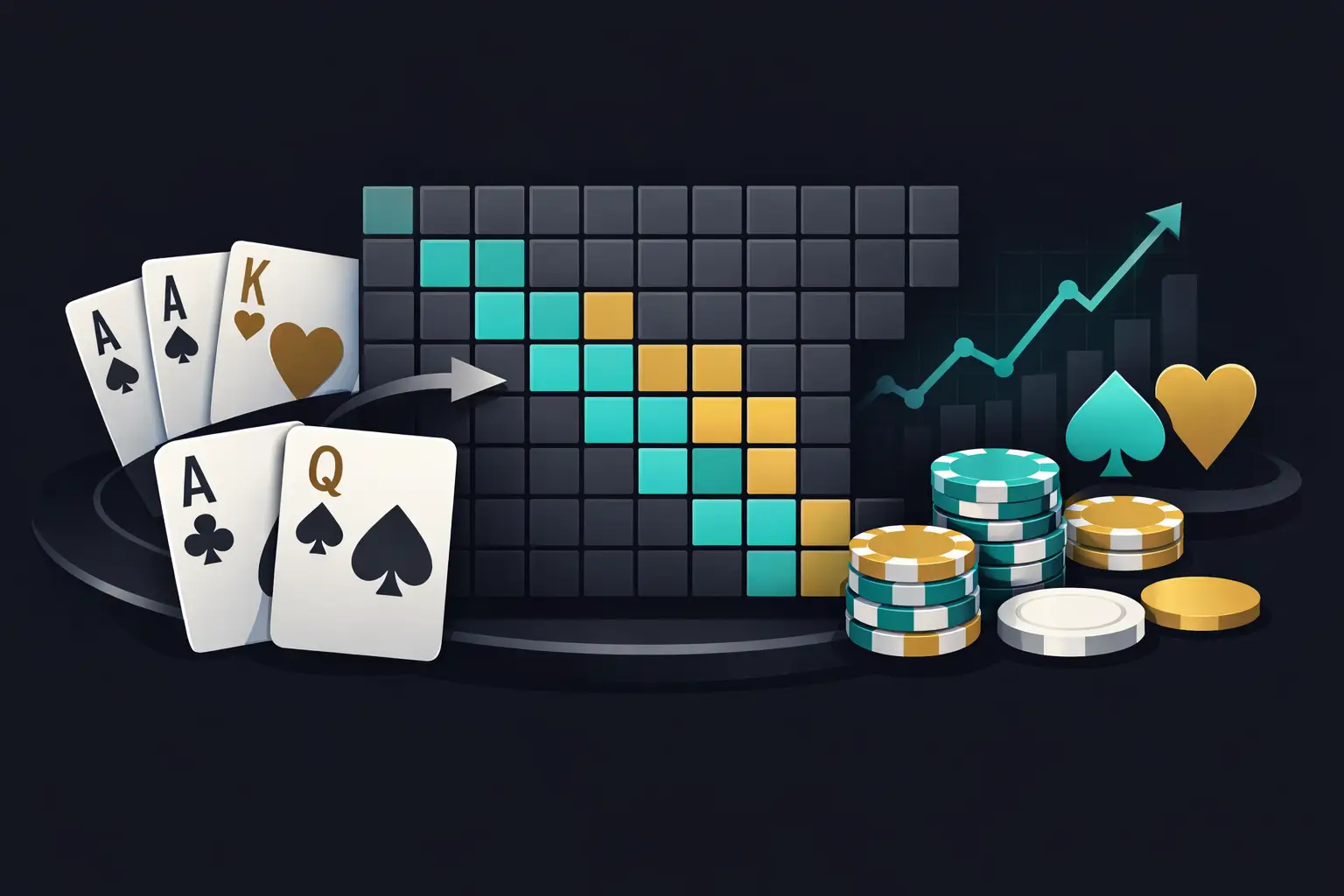
The hand is dealt. Action folds to you. This is where a huge share of your win rate gets decided before anyone sees a flop. A solid guide to preflop opening ranges is not about memorizing pretty charts for their own sake. It is about entering pots with hands that can make money from your seat, against the players behind you, at the stack depth you are actually playing.
Open too many hands from early position and you donate chips in tough, out-of-position pots. Open too few from the button and you leave the easiest money on the table. Get your ranges right, and postflop becomes simpler, your bluffs make more sense, and opponents have fewer ways to punish you.
What an Opening Range Actually Does
An opening range is the set of hands you choose to raise first-in with from a particular position. When everyone folds to you, you are not deciding whether a hand is "good" in a vacuum. You are deciding whether it is profitable to raise while accounting for the number of players left to act, position after the flop, rake, stack sizes, and player tendencies.
That last part matters. A hand like A5 suited is not valuable only because it can make an ace. It blocks strong aces, makes nut flushes, and has enough playability to continue on a range of boards. Meanwhile, a hand like K8 offsuit often looks playable to a recreational player but creates dominated top pairs and ugly decisions when called.
Your range should tighten as more players remain behind you. It should widen as you approach the button. That is the engine underneath every effective preflop strategy.
Guide to Preflop Opening Ranges by Position
Think in range families before you obsess over exact combos. You need a dependable default, then you adjust based on the table.
Under the Gun: Start Disciplined
In six-max poker, under the gun means five-handed action remains behind you. You will frequently play the rest of the hand out of position against someone who called or 3-bet with a stronger-than-average range. This is not the seat for speculative garbage.
Open your strongest pairs, strong broadways, premium suited aces, and the suited connectors with enough raw equity to survive pressure. A practical baseline includes pairs from 22+, suited aces such as A2s+, strong offsuit aces like AJo+ and AQo+, suited broadways, KQo, and better suited connectors such as T9s and 98s.
The exact boundary changes by game. At a soft low-stakes table, a slightly wider range can print because opponents call too much and make oversized postflop mistakes. In a raked online cash game with aggressive regulars, disciplined folds are often your best weapon.
Middle Position: Add Playable Hands
With one fewer player behind, middle position gives you room to add hands that are just below your early-position threshold. More suited kings, suited queens, suited connectors, and some additional offsuit broadways become reasonable opens.
The mistake here is widening with weak offsuit hands instead of hands that realize equity well. K9 suited is usually a cleaner addition than K9 offsuit. J8 suited can make strong draws and hidden two-pair hands. J8 offsuit mostly makes weak pairs that hate action.
A good range is not merely wide. It is built from hands that can continue intelligently when the flop arrives.
Cutoff: Pressure Starts Here
The cutoff is where profitable aggression accelerates. Only the button and blinds remain. You can open a much wider collection of suited hands, connected hands, pocket pairs, and decent offsuit broadways.
This position is especially profitable when the button is passive and the blinds overfold. If those players are not defending enough, keep raising. Do not wait for premiums while they hand you blinds and antes. Your opponents may call you loose, but the math does not care what they call it.
Still, do not confuse a wide opening range with random clicking. Weak offsuit aces, dominated kings, and disconnected trash can become expensive if the button 3-bets aggressively or the blinds fight back. Widen with hands that retain equity, not hands that simply look colorful.
Button: Take the Seat Seriously
The button is your money seat. You act last after the flop against the blinds, and both remaining players must defend enough to stop you from stealing relentlessly. Most do not.
A strong button opening range can include every pair, every suited ace, many suited kings and queens, a large group of suited connectors and one-gappers, plus a meaningful number of offsuit aces, kings, queens, and connected hands. The precise range may approach half of all starting hands, or even more, against overly tight blinds.
Position is not a tiny bonus. It changes everything. You see what your opponent does before you act, control pot size more easily, extract thinner value, and apply pressure on boards where they miss. If your button range is still almost as tight as your under-the-gun range, you are burning money.
Small Blind: A Different Game
The small blind looks tempting because only one player remains. But when the big blind calls, you play the entire postflop hand out of position. That cost is real.
Most cash-game strategies use a mixed approach from the small blind: raise strong and playable hands, fold the weakest hands, and sometimes complete with hands that do not perform well as raises. If you are building a simple strategy, raise a tighter linear range and avoid turning the small blind into a chaos machine.
Against a big blind who folds too often, raise more. Against a capable defender who 3-bets and floats aggressively, tighten up and choose hands with clearer postflop plans. There is no prize for "defending your frequency" with hands you cannot play.
Use Raise Sizes That Support Your Range
Your opening size should match the game and remain predictable enough that you do not leak information. In many online six-max cash games, 2x to 2.5x is a common default from most positions. Some players use a slightly larger size from early position or the small blind.
Smaller opens risk less when you are 3-bet and let you open more frequently. Larger opens can punish loose callers and build pots with a range advantage. Neither size is automatically right. What matters is having a reason and using it consistently.
Do not make it 4x with aces and 2x with suited connectors. That is not strategy. That is a tell with a receipt attached.
The Biggest Opening-Range Leaks
Most players do not lose preflop because they forgot whether 76 suited is a cutoff open. They lose because their habits are upside down.
The first leak is opening too wide from early position. You make a raise, get called by a better range, miss the flop, and suddenly every continuation bet feels like a guess. Tightening those first positions often improves results immediately.
The second is failing to attack late position. Players who wait for premium hands on the cutoff and button give up the most profitable steals in poker. You do not need aces to profit when the blinds fold 60% of the time.
The third is favoring weak offsuit hands over suited, connected hands. Suited hands have better equity, better bluffing potential, and fewer domination disasters. When you are deciding between marginal candidates, suited and connected usually wins.
The fourth is treating a chart as a commandment. Charts are defaults, not handcuffs. A 100-big-blind cash-game range does not automatically fit a 20-big-blind tournament stack, a straddled live game, or a table where two players call every open. Know the baseline, then exploit what is in front of you.
How to Learn Ranges Without Becoming a Chart Robot
Start with the broad positional rule: tight early, wider late, widest on the button. Then learn the hands at the edges of each range. Those are the decisions that create mistakes and separate a disciplined player from someone playing on feel.
For example, ask whether KTo is an early-position open, whether 65 suited enters from middle position, and how wide you can push the button against tight blinds. Study the borderline hands first. Nobody needs help opening pocket aces.
Next, review hands where you opened and faced a 3-bet or a difficult flop. Your opening range must work with your response strategy. If you cannot explain what happens after a 3-bet, you are not finished studying preflop.
PokerMoose can speed up that feedback loop by giving you an instant GTO-calibrated recommendation for the exact spot instead of leaving you stuck comparing screenshots and guessing. Use the answer to build patterns, not to outsource every decision forever.
Adjust Before the Table Adjusts You
Open wider when players behind you fold too much, especially on the cutoff and button. Open tighter when aggressive opponents 3-bet frequently, call in position, and force you into high-rake marginal pots. Against loose passive callers, prioritize hands that make strong top pairs and nut draws. Against nits, steal until they prove they can fight back.
Tournament conditions require another layer. As stacks get shorter, implied-odds hands like small suited connectors lose some value, while high-card strength and shove-or-fold pressure matter more. Near pay jumps, opening ranges can shift based on stack distributions and incentives. A cash-game chart will not solve that for you.
The winning move is not blind aggression or robotic tightness. It is recognizing what position is worth, choosing hands that can realize equity, and making opponents defend more often than they want to. Build your defaults, test the marginal spots, and make every unopened pot feel like an opportunity instead of a guess.
Put it into practice — free.
Open the solver, enter the spot you just read about, and see the optimal play instantly.